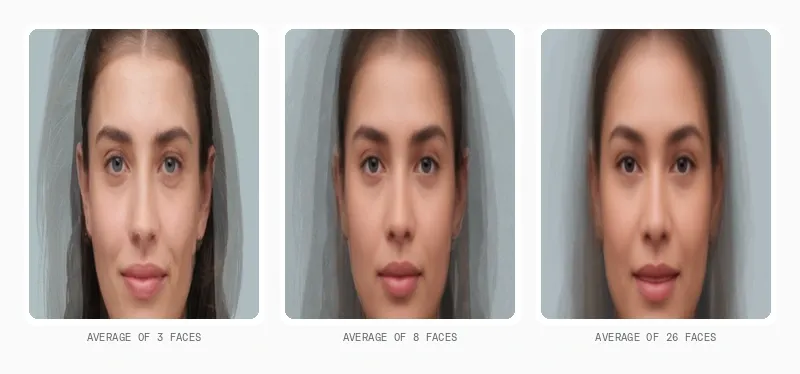
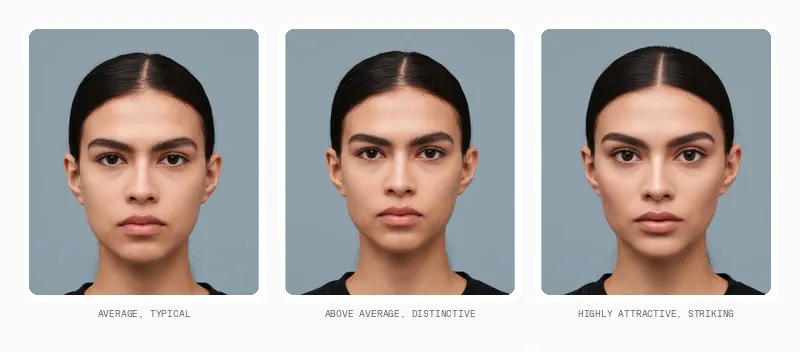
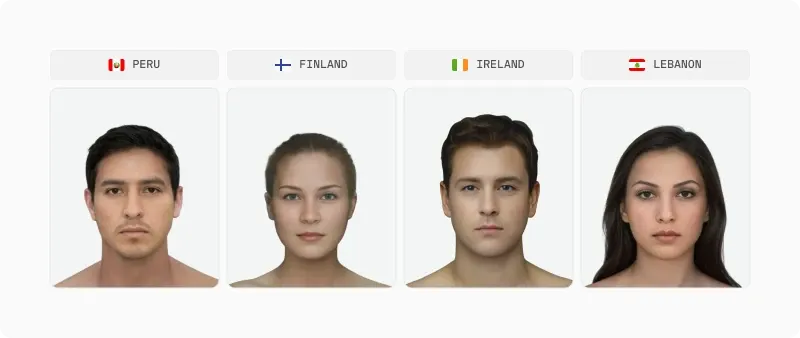
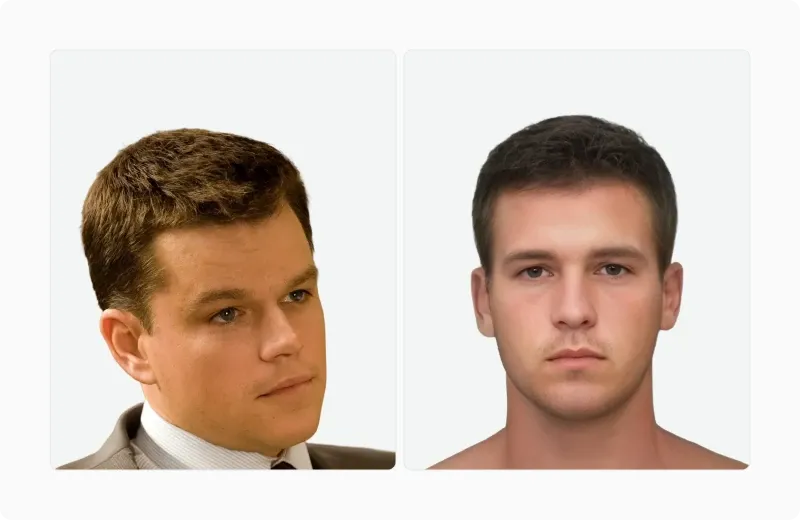
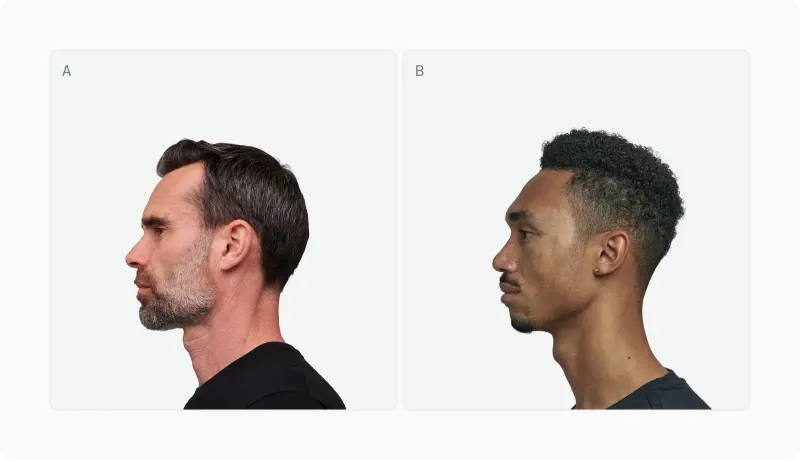
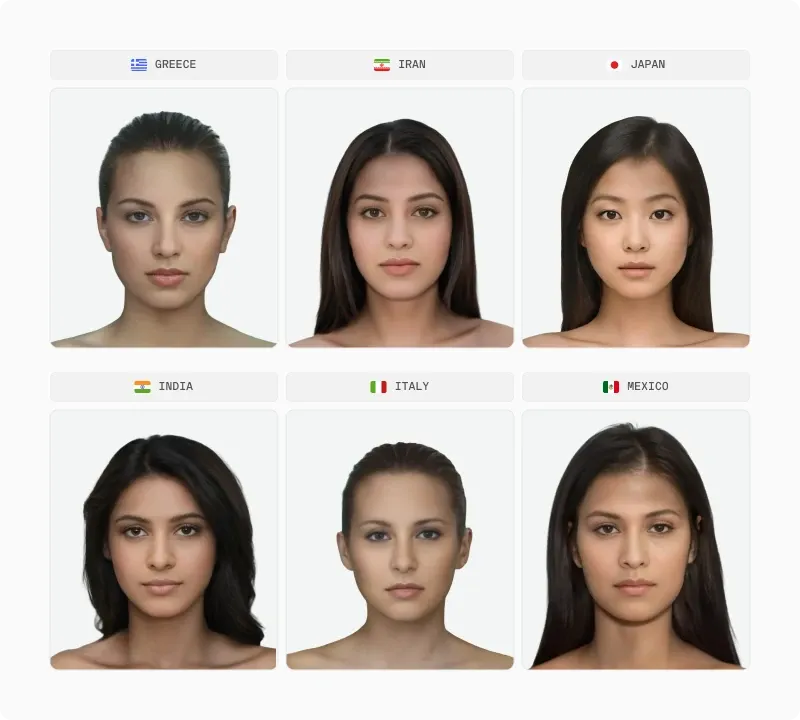
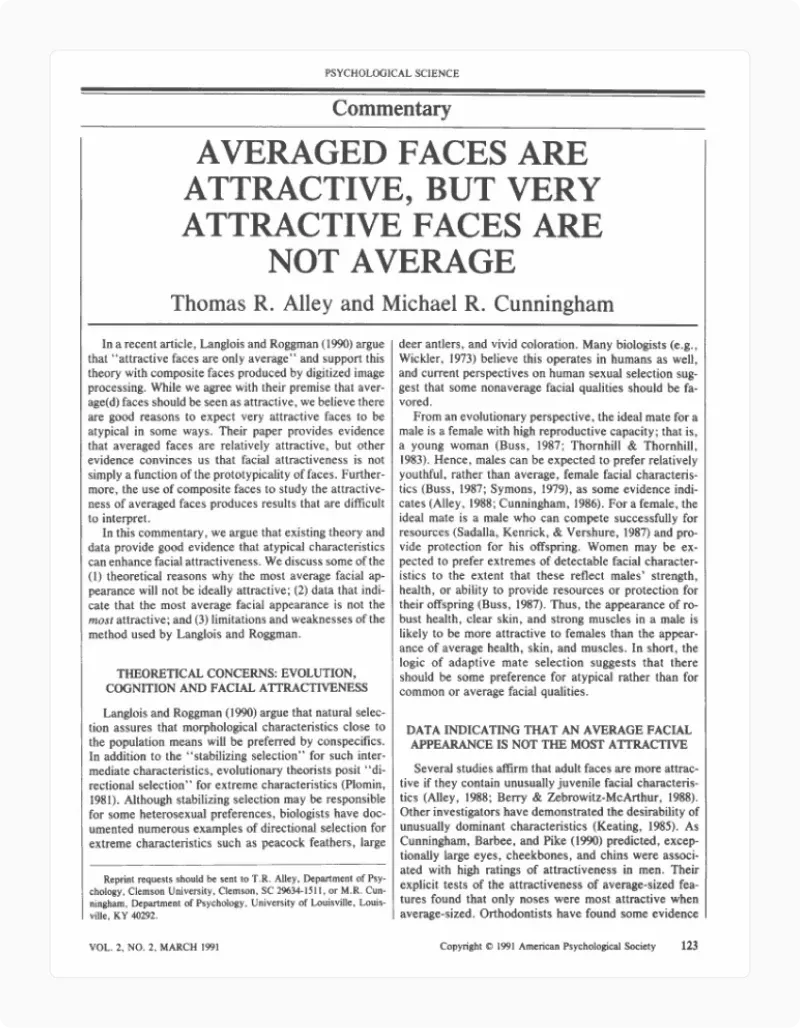
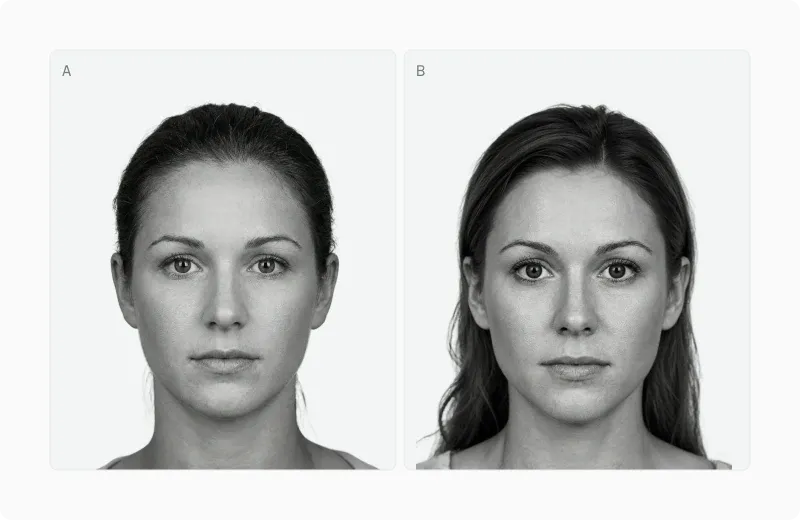
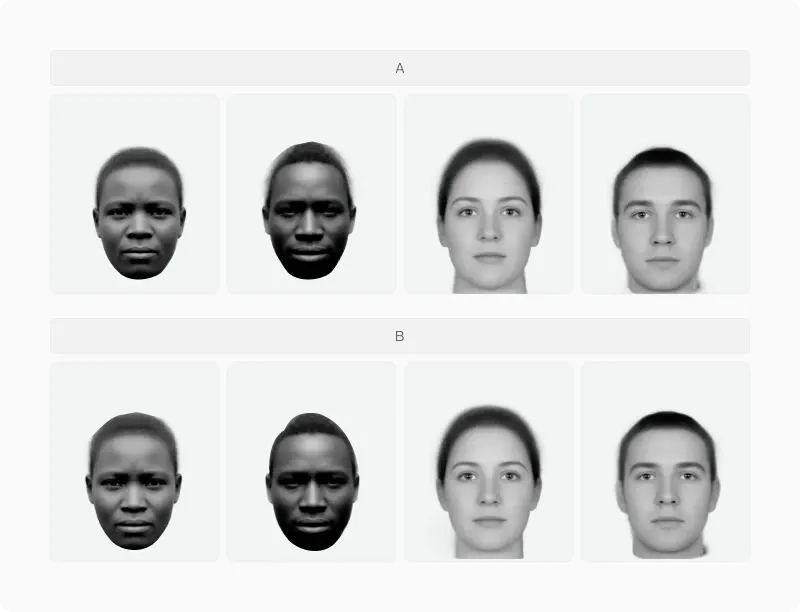
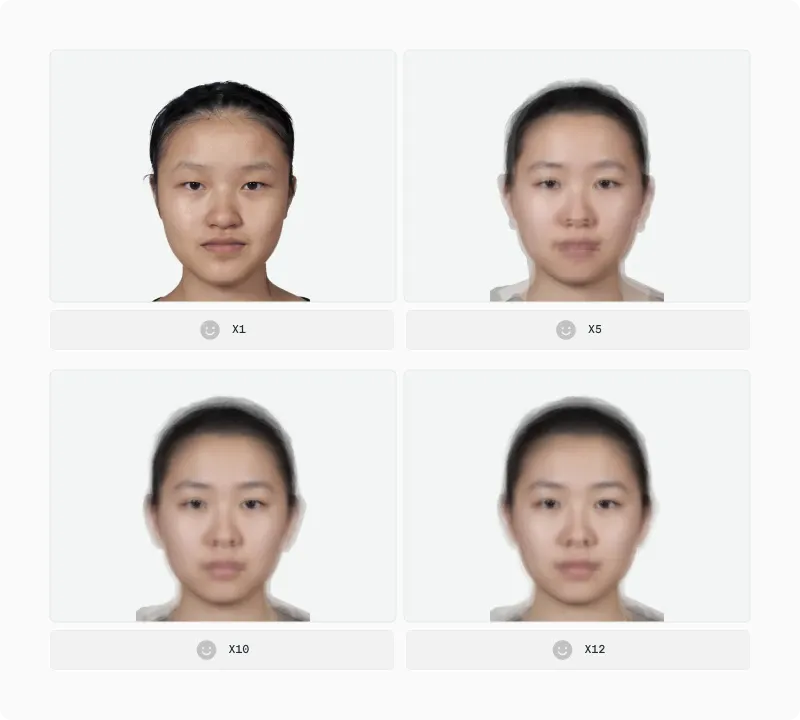
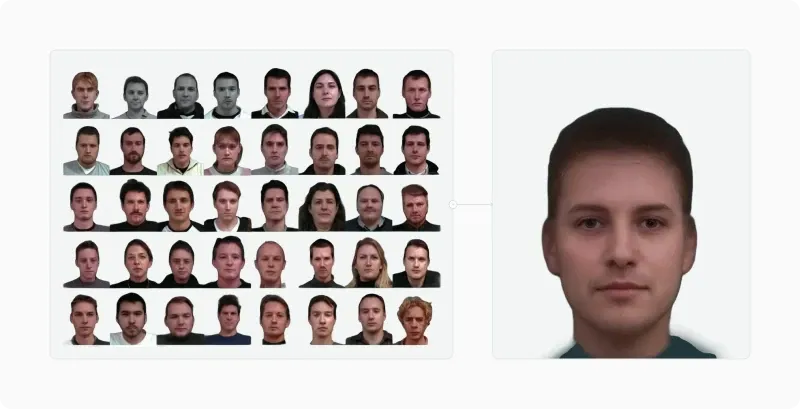
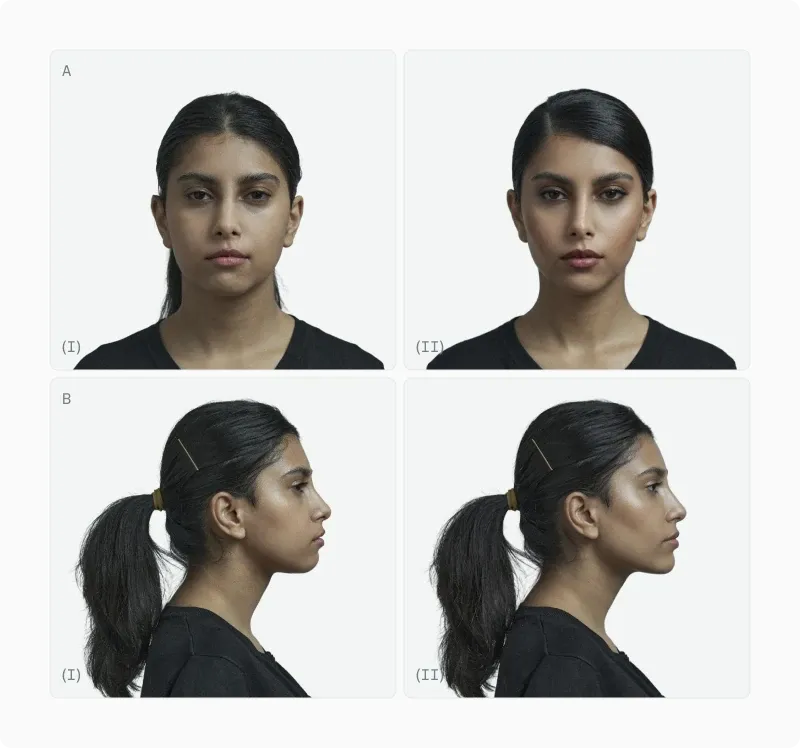
To understand why certain rare traits are compelling while others are not, you need to consider the 7 tenets of beauty in interaction.
3. The Purity Bias
Attractiveness is frequently (and mistakenly) associated with moral character. Evidence from moral psychology reveals that aesthetically pleasing faces are judged as purer and less capable of moral wrongdoing8. Put differently, people map traits of facial attractiveness like typicality or averageness onto intuitions about moral worth.
This linkage may result from an overlap in cognition around evaluations of physical appearance and character. A study on moral beauty by Klebl and colleagues8 found that people spontaneously perceive benevolence, honesty, and even “spiritual cleanliness” from attractive faces. This Purity Bias also leads observers to rate attractive individuals as less likely to commit moral violations.
4. The Health Signal
Facial averageness can also be perceived as a sign of health and genetic quality. Anthropologist Donald Symons9 argued that faces near the population mean performed better at tasks like chewing and breathing, and therefore averageness acts as a signal of good function. Thornhill and Gangestad10 instead suggested that average faces reflect greater heterozygosity, which is beneficial in the defence against parasites. Both perspectives claim that humans evolved a preference for facial averageness as one of many signals of biological fitness.
As we will see in more detail in Averageness and Health, averageness is perceived to be a signal of health, meaning that people perceive koinophilic faces as healthier11,12. However, the link between averageness and objective health measures is inconclusive12,13 and should not be taken as a reliable biomarker.
5. The Competence Premium
Koinophilic faces that are found attractive are rated as more competent and receive better job outcomes14, 15. Improving facial aesthetics via averageness, therefore, goes beyond looks and dating; it can also improve job, salary, and promotion outcomes.
This ‘competence premium’ is the Halo Effect with concrete consequences: higher leadership evaluations, stronger hiring prospects, and greater earnings16, 17. Studies show that the benefits are sex-asymmetric, with attractive women often receiving larger gains (and losses, too) based on their appearance17.
6. The Dating Dividend
Facial averageness can slightly improve romantic success as it increases perceived attractiveness and desirability as a mate. Experimental work across cultures and age groups shows that moving faces toward the mean (e.g., via composites) raises attractiveness and partner appeal for both men and women1, 18, 19.
The impact of this effect will, of course, heavily depend on where you currently stand on the attractiveness spectrum. As we’ve emphasised throughout this article, averageness can only take you so far.
7. The Confidence Loop
Believing one looks more attractive can shift behaviour in positive ways. This can be achieved by improving averageness, as we have seen it has a positive effect on facial aesthetics. Benefits from a more positive self-perception include an improved posture, a steadier gaze, and increased social approach.
This is consistent with the classic findings of Tesser in 1988, which showed that feeling attractive changes how people carry themselves20. The Confidence Loop reinforces itself: feeling attractive leads to more attractive behaviour, which elicits positive social feedback and strengthens self-esteem.