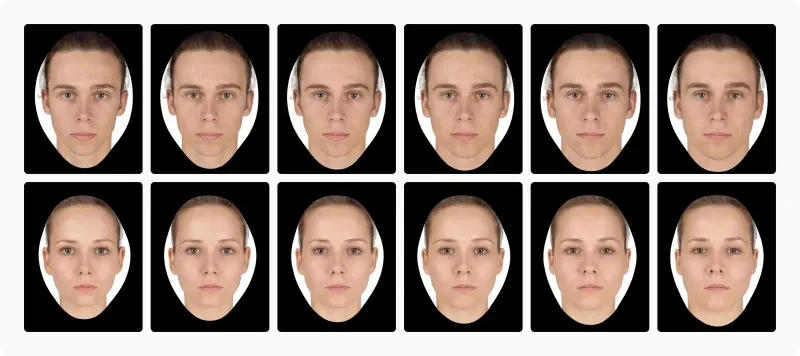
Nuances of Adiposity
Facial Adiposity and Health
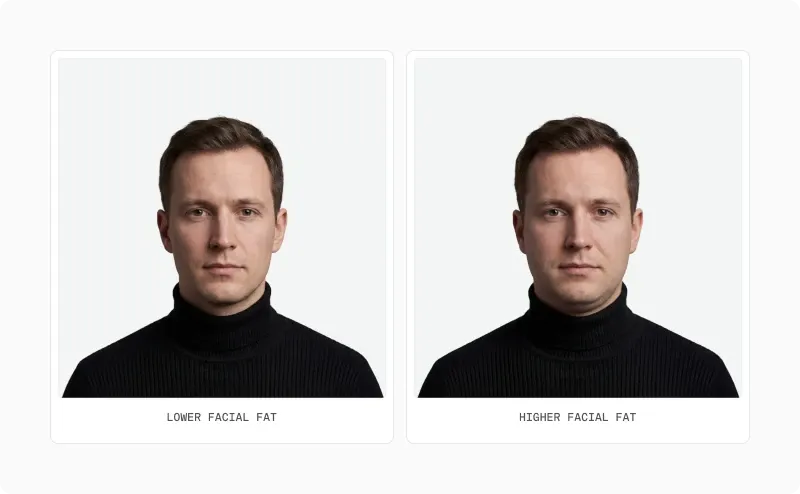
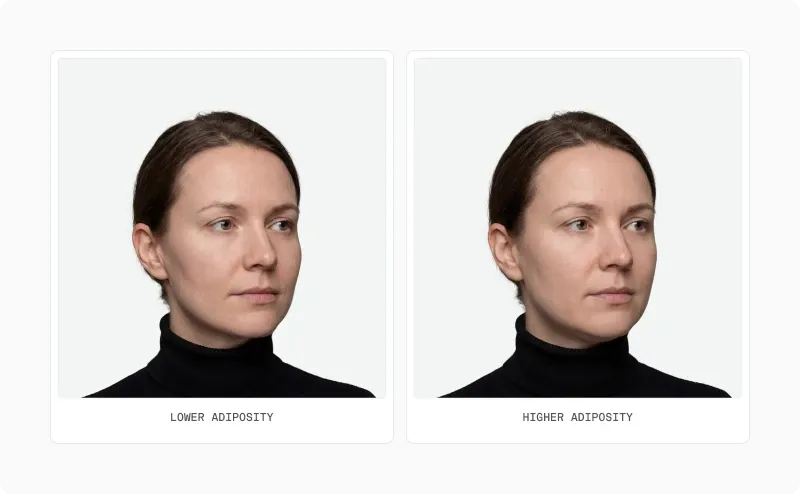
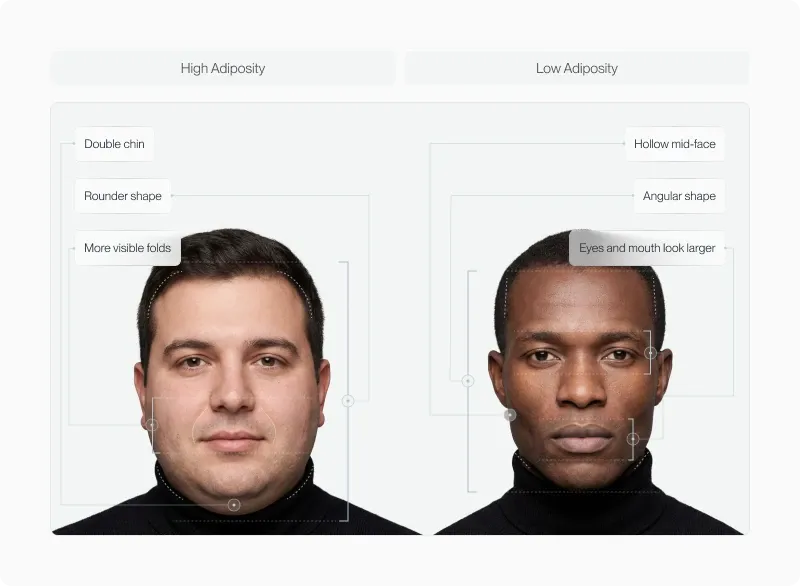
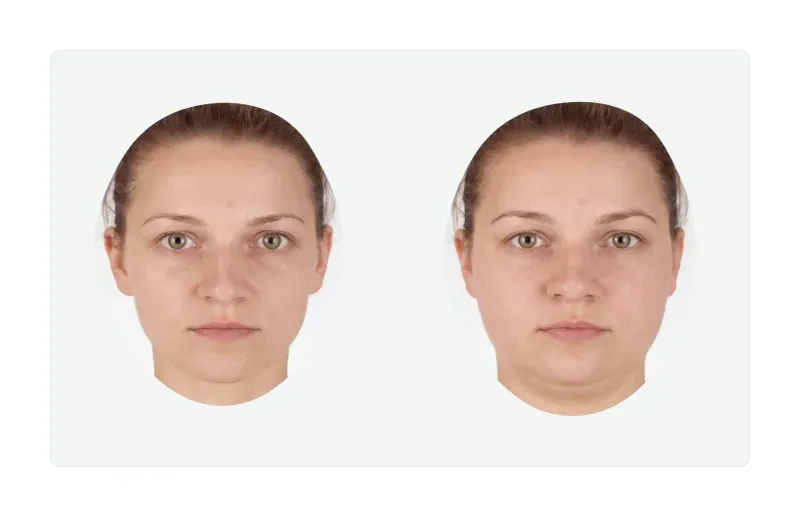
So far, we have repeatedly mentioned that there are strong links between facial adiposity and health, which largely explain its influence on attractiveness perceptions. But what are these links exactly? To what extent is facial fat actually a reliable biomarker? Below, we summarise the available evidence on objective health metrics that have been associated with facial adiposity.
Cardiovascular Health
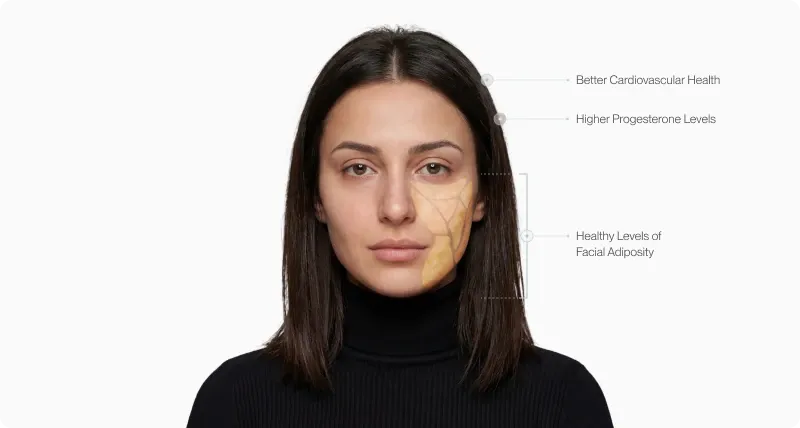
Reither and colleagues32 examined over 3000 yearbook photographs of teenagers, which were part of a large longitudinal study which, amongst other things, captured basic health data from 1957 to 2004. The researchers found that facial adiposity in the teenagers was correlated with high blood pressure, heart trouble, and heart disease later in their lifespan32. In 2009, Coetzee and colleagues found an association between facial adiposity and systolic blood pressure, diastolic blood pressure, and a cardiovascular-illness component8.
Immunity
Coetzee and co-authors8 also reported that higher levels of asiposity were correlated with an increase in the number of colds and flu’s participants reported, the length of those reported colds and flu’s, frequency of antibiotics use reported by participants, and a respiratory-illness component. Earlier in the article, we mentioned the influential paper by Rantala et al.11, which found an association between perceived facial adiposity in male faces and immune response, measured through antibody response to a Hepatitis B vaccination.
It’s worth noting that other measures of immunity have produced more inconclusive results. For instance, Phalane and colleagues found no association between facial adiposity and functional cytokine profile and C-reactive proteins in African men33. Foo and colleagues also found null relationships for bacterial killing capacity, bacterial immunity, and lysozyme activity34. Overall, there seems to be a link in males between facial fat and immunity, but clearly, more research is needed to better quantify this relationship.
Hormones
As mentioned before, Tinlin and colleagues revealed a negative association between facial adiposity and progesterone levels (salivary), but no relationship with estradiol levels12. Their sample size was quite limited (49 participants), so results should be interpreted with caution. Rantala and co-authors linked facial adiposity with circulating testosterone in males, revealing a stronger correlation than with facial masculinity11.
Sex-differences
In general, the association between facial adiposity and attractiveness is not sex-specific. That is, facial fat impacts attractiveness ratings in both male and female faces. However, if we go into a bit more detail, we can find some differences between men and women in terms of how facial adiposity impacts their facial aesthetics.
Stronger Link to Male Beauty
Adiposity seems to be a stronger predictor of facial male beauty than female beauty. For example, a study by Foo and colleagues found that, after accounting for other facial features, extra facial fat reduced attractiveness ratings roughly twice as strongly for male faces as for female faces in their sample34.